As the month of fasting comes to a close, Muslims around the world eagerly await the arrival of Eid ul-Fitr, a day that signifies joy, and gratitude. With the anticipation of Eid filling homes and hearts, one question stands out: How do Muslims celebrate Eid ul-Fitr? While customs may differ across cultures, the essence of the day remains the same; a time of prayer, togetherness, and giving. Wherever it’s celebrated, Eid brings Muslims together, making it a truly special occasion for everyone.
What is Eid ul-Fitr?
Also known as the “Festival of Breaking the Fast,” Eid ul-Fitr is a very significant Islamic holiday. It commemorates the end of Ramadan, the holy month of fasting, and is a time when Muslims gather to express gratitude to Allah for the patience and strength that were given to them during the fast.
When is Eid ul-Fitr Observed?
Unlike holidays with fixed dates, Eid ul-Fitr is celebrated in accordance with a lunar Islamic calendar which changes every year. The festivity starts on the first day of Shawwal which happens after the month of Ramadan, but the date is set based on the new moon sighting. Because lunar months are shorter than the Gregorian calendar, Eid does not fall on the same date each year and it is celebrated on different dates in different countries.
Preparations for Eid: A Time of Anticipation
The excitement for Eid ul-Fitr begins days in advance, as families and communities prepare for this special occasion. Some common preparations include:
- Buying new outfits and presents for their nearest and dearest.
- Giving Zakat al-Fitr to lend a hand to those less fortunate.
- Preparing festive meals, including sweets and traditional dishes.
How do Muslims Celebrate Eid ul Fitr: Global Overview
Despite its universal religious significance, Eid traditions vary by region, shaped by history, local customs, and cultural practices.
How do People Celebrate Eid al Fitr in Western Countries?
In cities such as London, Toronto, and New York, Muslims come together in spacious prayer halls, parks, and mosques to take part in the Eid prayer. Lots of communities organize big public celebrations with food stalls, cultural shows, and activities for the whole family. Even though Eid isn’t an official holiday in most Western countries, workplaces and schools usually try to be flexible for their Muslim workers and students.
How Do You Spend Eid ul Fitr in the Arab World?
Eid is celebrated in the Arab world with a large congregational prayer in mosques and public areas. Families gather for exquisite meals, and elders give children financial gifts called Eidiya (عيدية). Throughout the day, social visits, charitable endeavors, and joyous celebrations take place, strengthening ties to family and the community.
How to do Eid al Fitr Prayer
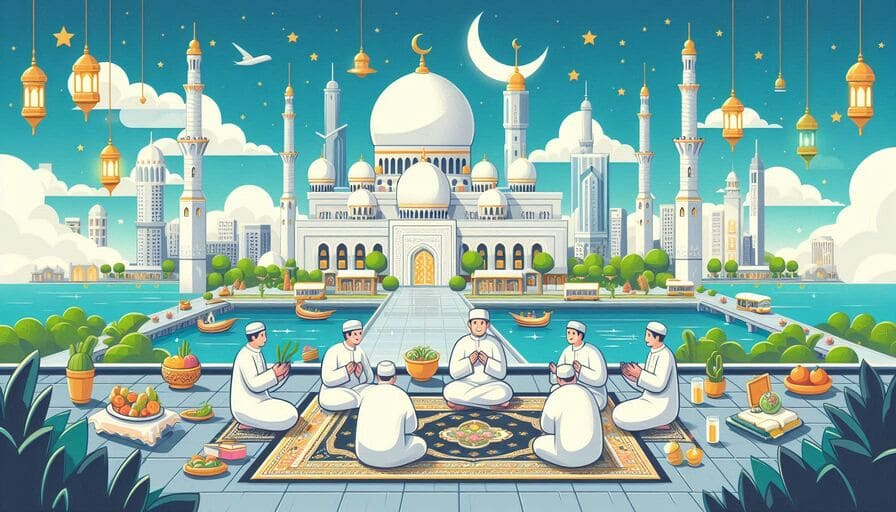
The Eid prayer is the most vital thing to perform on Eid morning. Unlike the usual prayers, it has a different format:
How to Perform Eid ul-Fitr Prayer:
- Perform wudu and wear your best clothes.
- As you make your way to the prayer, say the Takbir (“Allahu Akbar, La ilaha illa Allah…”).
- The Eid prayer is made up of two Rak’ahs (units of prayer):
- During the first Rak’ah, the Imam recites extra Takbirs (usually seven).
- During the second Rak’ah, extra Takbirs (usually five) are recited before recitation.
- This is followed by a sermon (Khutbah) that emphasizes the importance of being thankful, giving, and united..
What Happens After Eid Prayer?
After performing the prayer, Muslims engage in joyful activities such as:
- Feasting with loved ones.
- Visiting relatives and friends.
- Giving charity to those in need.
- Engaging in acts of kindness and reconciliation.
Eid ul-Fitr for Kids: A Day of Joy and Celebration
For children, Eid ul-Fitr is one of the happiest days of the year! It is a day of happiness, gifts, and reunions with family. Most children look forward to:
- Receiving Eidi (عيدية): The old give money or little gifts to the children as a sign of love and affection.
- Attending Eid prayer with family: The children dress in their best and go to the mosque with their parents for the special morning prayer.
- Enjoying sweet treats: Family and friends gather to share traditional desserts.
- Spending time with family and friends: Many children visit relatives, play games, and take part in festive activities.
To help kids understand the significance of Eid and Islamic traditions, E-hoopoe offers “What Muslims Must Know Kids Course” an engaging online course that teaches them about faith, celebrations, and values in a fun and interactive way!
How do you celebrate Eid al fitr: Eid forbiddens
Eid is a fantastic time to teach children about the importance of kindness and generosity. Parents use this occasion to encourage their kids to share their presents, lend a hand to those who need it, and cultivate a sense of gratitude, all of which embody the true essence of Eid.
Even though Eid ul-Fitr is a day filled with happiness and festivities, there are certain behaviors that Islam either frowns upon or strictly forbids. One such prohibition is fasting on Eid day. Since this day is all about being thankful after Ramadan, fasting is not allowed. Instead, Muslims are advised to break their fast in the morning before attending the Eid prayer.
Another crucial rule is that Zakat al-Fitr should be performed prior to the Eid prayer, as it is discouraged to do so after the prayer. Holding grudges, fighting, or ignoring family and community ties also goes against the spirit of Eid, which is a time for forgiveness and unity.
Extravagance and wastefulness should also be avoided. While dressing and festivity are favored, Islam promotes modesty and humility, and Muslims are encouraged to share their happiness with others, especially the poor.
E-Hoopoe’s Role in Islamic Education
At E-Hoopoe, we are committed to providing in-depth and comprehensive Islamic studies for students from all around the globe. Our structured online courses cover important subjects like Quranic Studies, Islamic Theology, Arabic for Non-Native Speakers, and Islamic Ethics.
Through our Islamic Ethics course, students become more familiar with moral values, allowing them to make ethical decisions according to Islamic teachings. Our course develops students’ ability and helps them incorporate Islamic values into their lives.
We offer flexible learning options, enabling students to boost their Arabic skills, deepen their faith, and forge a strong bond with Islamic teachings, all while learning from the comfort of their own homes.
Conclusion
Eid ul-Fitr is more than just a holiday; it’s a celebration of thankfulness, and faith. It is a time of celebration when communities unite, hearts are warmed by compassion, and cultural customs blend together. Beyond the celebrations, Eid is a time to remember rebirth, kindness, and happiness.
Answering “How do Muslims celebrate Eid ul Fitr?” is not a single answer but the core of the day itself. From Eid prayer, to joyful gatherings, acts of charity, and festive meals, every moment reflects the deeper meaning of togetherness and thankfulness. Whether through prayer, giving, or sharing in the joy of others, Eid continues to be a celebration of kindness, faith, and connection that transcends all cultures and generations.