4 Proven Tips How To Read Arabic Without Harakat
Quick Guide: How Can UK Muslims Learn to Read Arabic Without Harakat?
Learning to read Arabic without Harakat helps Muslims in the UK build confidence in Quran recitation and understanding.
This article offers four proven tips tailored for British Muslims who don’t speak Arabic—from London, Manchester, Birmingham, Leeds, and Glasgow—to master Arabic reading step by step through practice, phonetic awareness, and Quranic examples.
Harakat are small grammatical signs in Arabic that allow for correct pronunciation and hlep understanding the meanings, There are 4 Proven Tips How to Read Arabic Without Harakat, Learning how to read Arabic without harakat can feel daunting at first. These small diacritical marks play a big role in helping beginners understand pronunciation, word meanings, and sentence structure. However, you won’t often see harakat in everyday Arabic writing like newspapers, books, signs, or posts on social media. When reading these, you’ll need to use your knowledge of grammar, vocabulary, and the context to understand what’s being said.
Since mastering this skill represents an important milestone in your Arabic journey and a door to confident and fluent reading, we’ve created this blog to guide you.
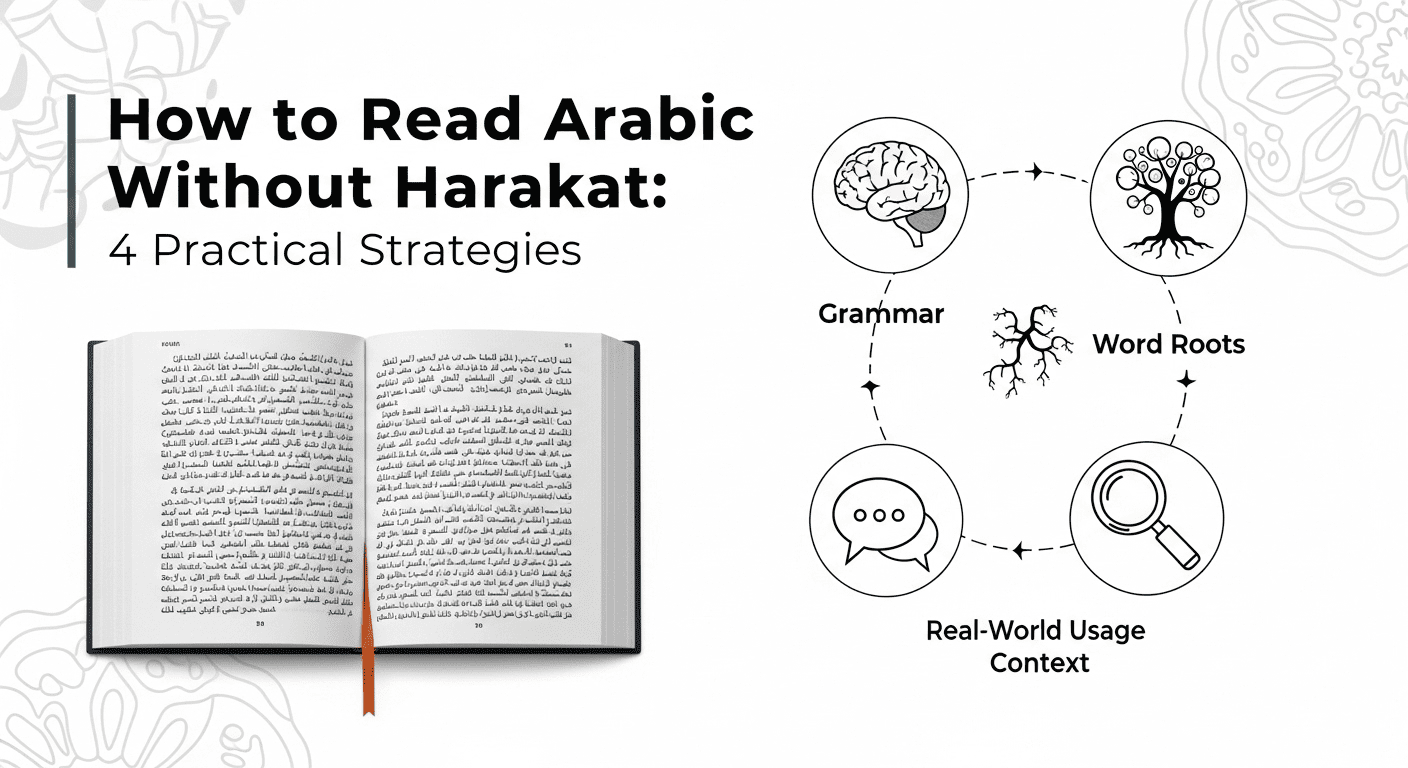
Below you will find 4 effective strategies and helpful advice for switching from vowelled to unvowelled Arabic.
1- Understand Arabic grammar and vocabulary
Before you are able to read Arabic comfortably without harakat, you should have a solid understanding of the language’s structure. Arabic is an extremely systematic language, and a large part of its meaning is dependent on grammar rules, root patterns, and sentence flow. In the absence of harakat, it is your understanding of these elements that helps you figure out meaning and pronunciation.
Start by learning the most common root patterns in Arabic, which are typically made of three consonants.
You should also familiarize yourself with:
- Verb conjugations in all tenses
- Noun case endings (nominative, accusative, genitive)
- Common prefixes and suffixes
2- Practice with Harakat first
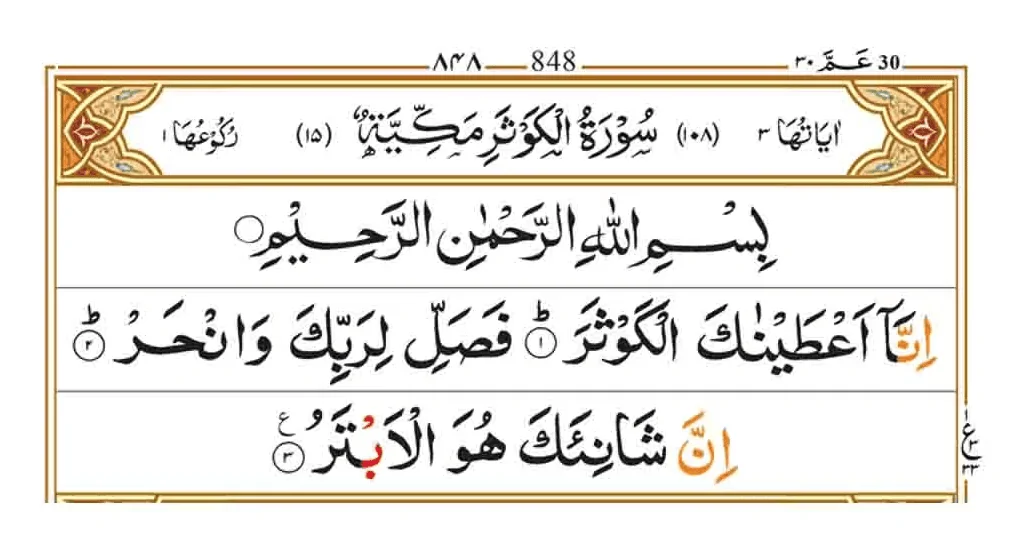
Before diving into texts without harakat, it’s essential to spend time reading Arabic with full tashkeel. Moving on to reading Arabic with no harakat, too soon, can lead to unhelpful confusion, and poor reading techniques.
Begin with children’s books or beginner-level texts. These resources are explicitly created to assist the learner in linking sounds with letters while developing reading fluency. Once you are comfortable, expand to simple news articles or short stories that include harakat.
This gradual, layered approach helps you:
- Build your vocabulary and reading speed.
- Prepare for authentic reading experiences, where harakat are usually absent.
3- Switch between text with and without harakat
Once you feel comfortable reading Arabic with harakat, the next step is to get used to reading texts without them. An effective way to do this is to read the same text two times: first with the vowel marks, and then without them.
Start by choosing familiar materials that you’ve already read and understood with tashkeel. After that, read the exact same text again, but this time ignore the diacritical marks.
As your comfort level grows, challenge yourself with new texts without harakat to gradually train your brain to fill in the missing vowels automatically, based on grammar, vocabulary, and sentence structure.
4- Use context and structure to understand meaning
Trying to read Arabic without harakat requires you to have a solid understanding of the context and the grammar. Since lots of Arabic words look the same without vowels, it becomes super important to figure out how each word functions within the sentence.
To navigate unvowelled text effectively, focus on identifying the grammatical roles (subject, verb, object) and how they interact. Prepositions, conjunctions, and verb patterns often serve as useful clues to determine both meaning and pronunciation.
Try not to read word by word instead, aim to grasp the whole sentence at once.. The overall structure and flow often reveal what a word means, even without diacritics.
Harakat importance for reading Arabic
While advanced readers often rely on context, harakat play a critical role, especially in early learning and in specific types of texts.
Key importance:
- Pronunciation guide: Harakat indicate short vowel sounds, making it easier to properly pronounce words.
- Clarifying meaning: The same sequence of letters can form different words depending on the harakat.
- Essential for religious texts:In the Qur’an and religious books, harakat aid proper recitation and understanding. Even a tiny mistake can really change the meaning.
- Improved reading accuracy: They reduce ambiguity, allowing learners to read faster, make fewer mistakes, and focus on comprehension.
Benefits of learning how to read Arabic without harakat
- Engaging with the language as it’s used every day: Most Arabic materials like books, news articles, websites, and social media are written without vowel marks.
- Strengthens your sense of grammar: As you engage, you will begin to recognize patterns. You will be able to anticipate grammatical functions and guess the vowels that go with the letters.
- Improves overall language skills: By encountering words in their unmarked form, you get better at understanding spoken Arabic, responding more naturally, and recognizing familiar words in many different situations.
- Essential for academic and career growth: In fields like education, translation, religious studies, or media, reading unvowelled Arabic is often expected. It shows a deeper command of the language and prepares you for more advanced challenges.
Common mistakes when reading without harakat
- Confusing look-alike words: Many Arabic words are spelled exactly the same but have entirely different meanings when vowels are changed. Without harakat, it’s easy to read a word wrongly and misinterpret the entire sentence.
- Improper pronunciation: Harakat contribute greatly towards pronunciation; when they’re not there, students may stress the wrong syllable or use the wrong vowel sound which can change meanings or cause confusion in communication.
- Overlooking grammar cues: Harakat often indicate grammatical case or word function. Skipping these indications can lead to confusion about the function of words in the sentence.
Smart tips & tricks to boost your progress
- Start small & stay consistent: You don’t need to dive into long articles immediately. Start by reading shorter texts that you find interesting, and try to read a little bit consistently each day.
- Leverage online classes: Signing up for a well-structured Arabic grammar course can really help you understand how words work within sentences. This knowledge makes it much easier to figure out the right meanings and pronunciations, even when you don’t have any harakat to guide you.
- Create a personal word bank: Have a physical notebook or a digital document that you can use to write down tricky words or common words you’ve come across. Include both vowelled and unvowelled versions for regular review.
- Join language groups: Connecting with other Arabic learners or native speakers can expose you to more unvowelled content and provide feedback when needed.
📘 Start Your Arabic Journey with E-HOOPOE
If you’re a UK Muslim eager to understand the Quran and Arabic texts without relying on harakat, E-HOOPOE Arabic Courses are your perfect next step! Our online programs are designed especially for non-Arabic speaking Muslims in the UK, helping you build confidence, fluency, and real-life comprehension.
👉 Join now and start learning today: https://e-hoopoe.com
For community support and in-person activities, you can also connect with the London Central Mosque & Islamic Cultural Centre here:
Build real Arabic fluency with E-hoopoe
E-Hoopoe provides learners with an innovative, step-by-step system to master the Arabic language, and more importantly, to understand how to read Arabic without harakat with confidence. Through its thoughtfully designed curriculum, E-Hoopoe offers some of the Best Arabic classes online, combining clarity, structure, and practical application.
With E-Hoopoe, you will learn 4 Proven Tips How To Read Arabic Without Harakat, and you get access to:
- Grammar-based lessons that help you decode meaning without relying on diacritical marks.
- Interactive reading practice that gradually transitions you from vowelled to unvowelled texts.
- Personalized feedback to reinforce correct pronunciation and sentence comprehension.
By focusing on grammar, root patterns, and real-world sentence structures, E-Hoopoe empowers you to read Arabic the way native speakers do naturally, and without needing harakat.
Ready to read Arabic like a native? Try E-Hoopoe’s Arabic classes today with a free trial.