Writing the Arabic alphabet for kids and beginners will become much simpler by practicing letter writing step-by-step and getting easy pronunciation tips. Arabic letters may seem unusual compared to the English alphabet, but kids can learn them quickly using repetition, tracing, and entertaining activities.
In this guide for beginners, you will find out how to write Arabic letters properly, learn about their pronunciation, and help kids master the skill of reading and writing Arabic from childhood.
How to Teach the Arabic Alphabet for kids Properly
Teaching the Arabic alphabet to kids requires a lot of patience and creativity and a variety of methods. Children love to learn interesting, engaging and interactive techniques.
Play-based Learning and Gaming:
Kids learn best when they are engaged and interested in what they’re doing. Adding some games to the learning process can be really helpful.
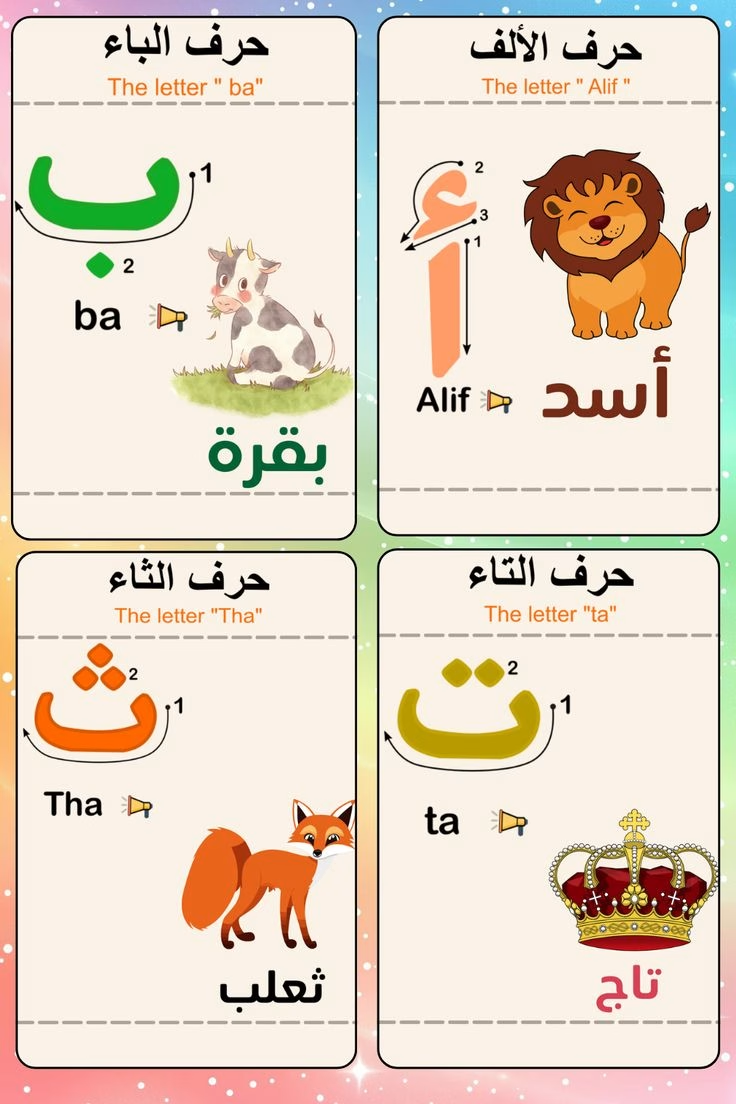
- Flashcards: Flashcards with each letter, its name, what it looks like on its own, and a simple word starting with that letter would be helpful, Games like memory match (letter-letter, letter-picture) work very well.
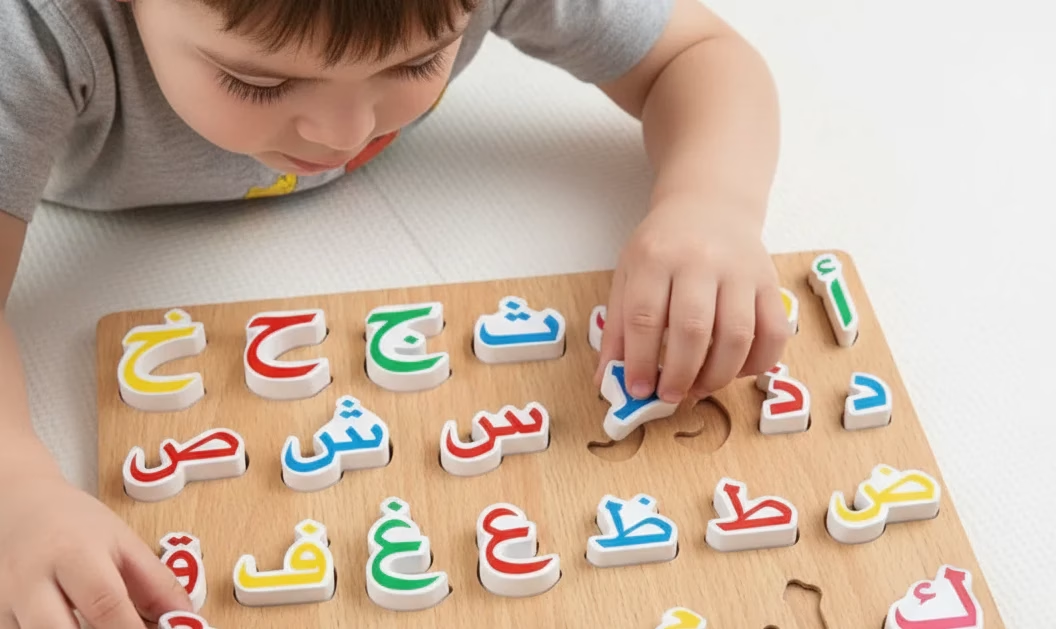
- Alphabet Puzzles: Alphabet puzzles help children learn the sequence and shapes of the alphabet.
- Songs and Rhymes: Songs going through the alphabet (like ABC song in English) can be used as an excellent aid to memorizing the letters. There are a lot of online resources with songs for the alphabet in Arabic.
- Interactive Apps and Websites: There is lots of resources for children of different ages to choose in 2026. Interactive apps and educational websites usually use animation, games and prizes in learning process.You can explore this 3asafeer.com
How many letters are in the Arabic alphabet?
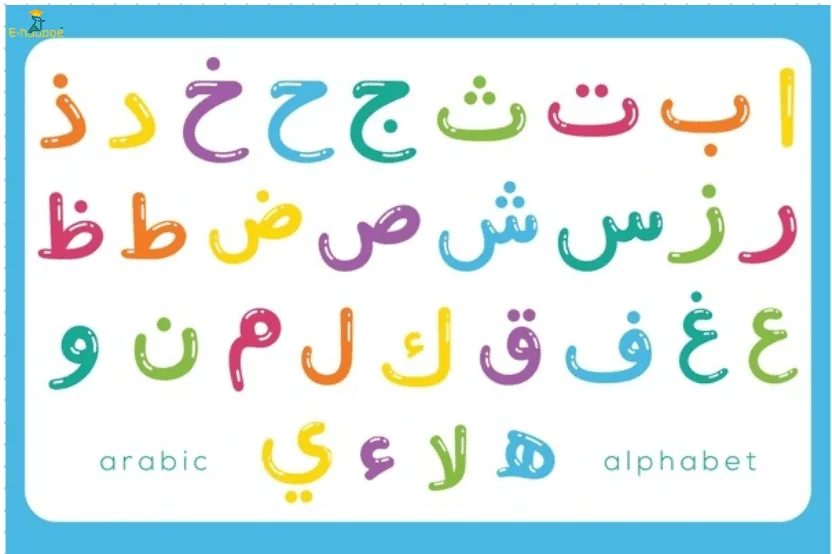
There are 28 letters in the Arabic alphabet. Each of these letters represents a consonant, unlike in English where vowels have their own letters. Moreover, Arabic is read and written from right to left, which is one of the most important distinctions for new learners to be aware of.
Features of the Arabic alphabet
The Arabic alphabet has a unique structure and style that makes it stand out among world languages. Here are the key features every beginner should know:
- Right-to-left script: Arabic is written and read from right to left, which may feel unfamiliar to learners used to Latin-based languages like English.
- Cursive writing: Unlike English, where printed letters are separate, Arabic letters are usually connected in a cursive form. This flowing script creates a smooth rhythm in writing.
- Letters change shape: Most Arabic letters change shape based on where they occur in a word. The same letter will look different at the beginning, middle, end, and when written alone.
- Consonant-based alphabet: Arabic mainly uses letters for consonants. Long vowels appear as specific letters (ا، و، ي), while short vowels are shown with small marks, not full letters.
- Vowel markings (Diacritics): Short vowel sounds are represented by diacritical marks (small symbols written above or below the letters). These are often used in books for learners or in religious texts like the Qur’an
Comparing between the Arabic and English alphabets
- There are 28 letters in Arabic, only two more than the 26 letters in English
- English uses both uppercase and lowercase letters, but Arabic does not have capital or small letters.
- Some Arabic letters represent sounds that don’t exist in English, such as ع (Ayn), ح (Ḥaa’), and ض (Dhad), which can be challenging for English speakers to pronounce.
- English represents vowel sounds using full letters (a, e, i, o, u), while Arabic uses diacritical marks for short vowels and specific letters (ا، و، ي) for long vowels.
| Feature | Arabic Alphabet | English Alphabet |
| Number of Letters | 28 letters | 26 letters |
| Type of Letters | Mostly consonants; long vowels (ا، و، ي) | Consonants and vowels (a, e, i, o, u) |
| Short Vowels | Shown with diacritical marks ( َ ِ ُ ) | Represented by full letters |
| Writing Direction | Right to left | Left to right |
| Letter Connection | Letters are usually connected (cursive) | Letters are mostly written separately |
| Capitalization | No uppercase or lowercase | Has both uppercase and lowercase letters |
| Letter Shapes | Letters change shape based on word position | Letters stay the same shape |
Arabic letters and their English sounds
| Arabic Letter | Name (Transliteration) | Closest English Sound |
| أ | Alif | A (as in “apple”) |
| ب | Baa | B (as in “bat”) |
| ت | Taa | T (as in “top”) |
| ث | Thaa | Th (as in “think”) |
| ج | Jeem | J (as in “jam”) |
| ح | Haa | H (strong breathy H) |
| خ | Khaa | Kh (like “loch”) |
| د | Daal | D (as in “dog”) |
| ذ | Dhaal | Th (as in “that”) |
| ر | Raa | Rolled R (like in Spanish) |
| ز | Zay | Z (as in “zoo”) |
| س | Seen | S (as in “sun”) |
| ش | Sheen | Sh (as in “shoe”) |
| ص | Saad | S (emphatic) |
| ض | Daad | D (emphatic, unique to Arabic) |
| ط | Taa | T (emphatic) |
| ظ | Zhaa | Z (emphatic) |
| ع | Ayn | Deep throat A |
| غ | Ghayn | Gh (like French “r”) |
| ف | Faa | F (as in “fun”) |
| ق | Qaaf | Q (deep K) |
| ك | Kaaf | K (as in “kite”) |
| ل | Laam | L (as in “love”) |
| م | Meem | M (as in “man”) |
| ن | Noon | N (as in “no”) |
| هـ | Haa | H (as in “hat”) |
| و | Waaw | W (as in “water”) / oo |
| ي | Yaa | Y (as in “yes”) / ee |
How to write arabic Alpabet for Kids and beginners: 4 simple tips
- Practice Reading Aloud: Get used to the sounds and shapes of Arabic letters by reading them out loud regularly. This reinforces the link between what you see and hear.
- Learn the Names of the Letters: Knowing the Arabic names of the letters helps with memorization and builds a foundation for spelling and pronunciation.
- Grouping Similar (in shape)Letters: Some letters are similar to one another, but are distinguished by dots (e.g. ب، ت، ث). Studying them in groups makes them easier to remember and reduces mix-ups.
- Write Step by Step: Practice each letter alone first. Try combining letters to create simple words once you feel at ease. Observe how the shapes of letters vary according to where they are in a word.
Arabic Alphabet For Kids with E-Hoopoe
E-Hoopoe makes it easy and fun for Muslim kids in USA, UK, Canada to learn reading & writing of Arabic alphabet. We offers online Arabic courses for kids to learn how to read and write the Arabic letters. Moreover, our kids’ courses are structured to guide students in enhancing their reading and writing skills.
If you want to learn Quranic Arabic, explore our online Quran classes for kids and Adults.
Conclusion:
Learning how to write Arabic Alphabet for kids and beginners starts with understanding the basic shapes, strokes, and flow of the script. Since Arabic letters connect differently depending on their position in a word, the best progress comes from daily practice with guided exercises, tracing worksheets, and clear pronunciation support. If you’re a non-Arabic speaker in the US, UK, Canada, Australia, Norway, or the UAE looking for structured learning and community support, there are excellent Islamic centers offering classes, resources, and guidance:
🔗 Islamic Centre of England – London (UK): https://ic-el.uk/
🔗 Islamic Dawah Centre – UK: https://idcuk.org/
🔗 Islamic Center of America – Dearborn, MI: https://icofa.com/
🔗 Islamic Center of Southern California: https://islamiccenter.com/
🔗 Islamic Cultural Center of New York: https://icc-ny.us/
These centers provide Quran classes, Arabic lessons, and community support that complement your writing practice. For a more structured online journey, you can also visit E-Hoopoe’s Arabic learning programs, which guide you from beginners’ letter formation to confident reading and comprehension. Start today — with consistent practice and the right support, your ability to read and write Arabic will grow faster than you think.
Book Free Trial Now and start your learning Arabic journey!